Tudor heads north
With the applause of Cambridge ringing in their ears, and having expressed his wish to return in 1894 (he wasn’t able to), William and his company went to Durham on Monday 2 October, 1893. On Saturday they were ready to open in Tudor’s Circus: attractions anticipated during the season included Nimble Nip, Whimsical Cyril, Comical Sam, equestrian Clarence Welby Cooke, and Onzalo (‘Demon of the air’).
Mr William Tudor has reappeared amongst us, and his announcement of a long series of interesting programmes at his Circus in Court Lane will be received with pleasure . . . Mr Bucknall is again Mr Tudor’s representative, as hale and hearty as ever, and for the opening night he has billed a string of artistes whose abilities leave nothing to be desired.
Durham County Advertiser, 6 October 1893, p 8
Mr Tudor has opened his popular evening rendezvous for another season, and the opening performance on last Saturday evening was a splendid success . . . the bell rang for the first item on the programme amid tumultuous cheers and rounds of hearty clapping.
Durham County Advertiser, 13 October 1893, p 5
Oscar Dubourg and Lolla the Mermaid performed their watery tricks in mid-October, and a month later the venue was being advertised as Tudor’s Excelsior Circus (Durham County Advertiser, 17 November 1893, p 5): old friends Professor Dainez and his goats and dogs were on the bill. The genial Mr Bucknall received a benefit on Tuesday 21 November, while Tudor took his on the Friday in the presence of the local MP and the Mayor of Durham.
The season closed on the Saturday and on Monday 27 November the circus was open again in South Shields for a season that ran until 31 March 1894. Overlapping South Shields by a fortnight, the circus in Croft Road, Blyth had reopened on 19 March for a three-month season that featured the water carnival and ended on 16 June. On the closing night William Tudor was presented with the following remarkable tribute by the citizens of Blyth:
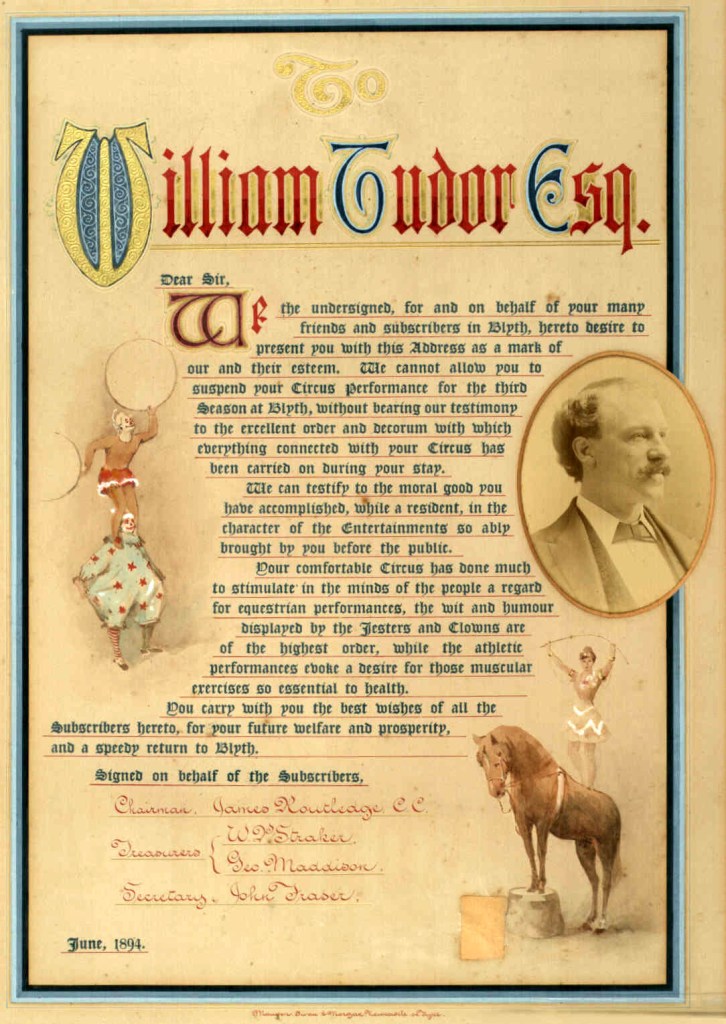
The Blyth citizens’ tribute, 1894 (reproduced with kind permission of Northumberland Archives)
Back to Durham went our Mr Tudor, for an immediate opening on 18 June and a closing night on 7 July, with a one-off show for the miners on 21 July. And then it was Blyth again on 6 August, where the Croft Road circus, remodelled with a moveable stage, was now described as a music hall. That season finished on 10 November after a new run had opened in Gateshead on 29 October.
Did this man ever stand still? Even one of his buildings moved from one north-east town to another when the South Shields circus was taken down and re-erected in Gateshead. The building plan and Tudor’s request for planning permission there may be found in our section on wooden circuses.
There was no let-up. The Gateshead circus closed on 9 February 1895, opened again in March, and closed again on 4 May. Meanwhile, The circus in Durham had re-opened on 18 February, closed on 11 May and opened again on 20 May, for five nights only. Tudor was clearly as adept at juggling his resources and staff as he was knives on horseback. Blyth had re-opened on 11 April with brother Funny Fred Hall managing and performing, William himself appeared in early June, and the season probably closed on June 15, two days before the re-opening on Midsummer Common for the 1895 summer season.
Meanwhile, in Cambridge and Chesterton . . .
. . . the townsfolk managed to enjoy themselves even while Tudor was gallivanting round north-east England. We know from his 1893 end-of-season speech that he would have returned to Midsummer Common in 1894, but there were no circuses there that summer because it was the site of the annual Royal Agricultural Society of England Show – usually known as the Royal Show. As we will see, Tudor was back in June 1895, but in the meantime Ginnett’s Circus visited Petersfield Common at the town end of Mill Road at Easter 1894 (CIP, 30 March 1894), and Lord George Sanger came to town on 25 and 26 October.
Sanger, a noted hippodramatist, brought with him a menagerie of wild animals with enough people, horses, camels, and elephants to stage the War in Soudan, where the cast also included Idasia, the Beautiful Woman of Egypt. Another attraction was ‘Pauline de Vere (the most beautiful woman in the World) in her elegant, chaste and Classical Serpentine Dance in a Den of African Lions.’ Also present was the ‘Grandson of the Celebrated Racing Horse, Robert the Devil.’ This was the Tipster, a ‘Clairvoyant, Educated, and Talking Horse . . . [who] Will foretell the winner of every race through the year 1894’ (CIP, 19 October 1894, p 1).
This amazing show took place ‘in the enormous marquee on Midsummer Common . . . the talking horse “Tipster” . . . this beautiful and intelligent creature tells the time, and goes through a thought-reading entertainment without a mistake’ (CDN, 26 October 1894, p 3).
A good year for Cambridge town
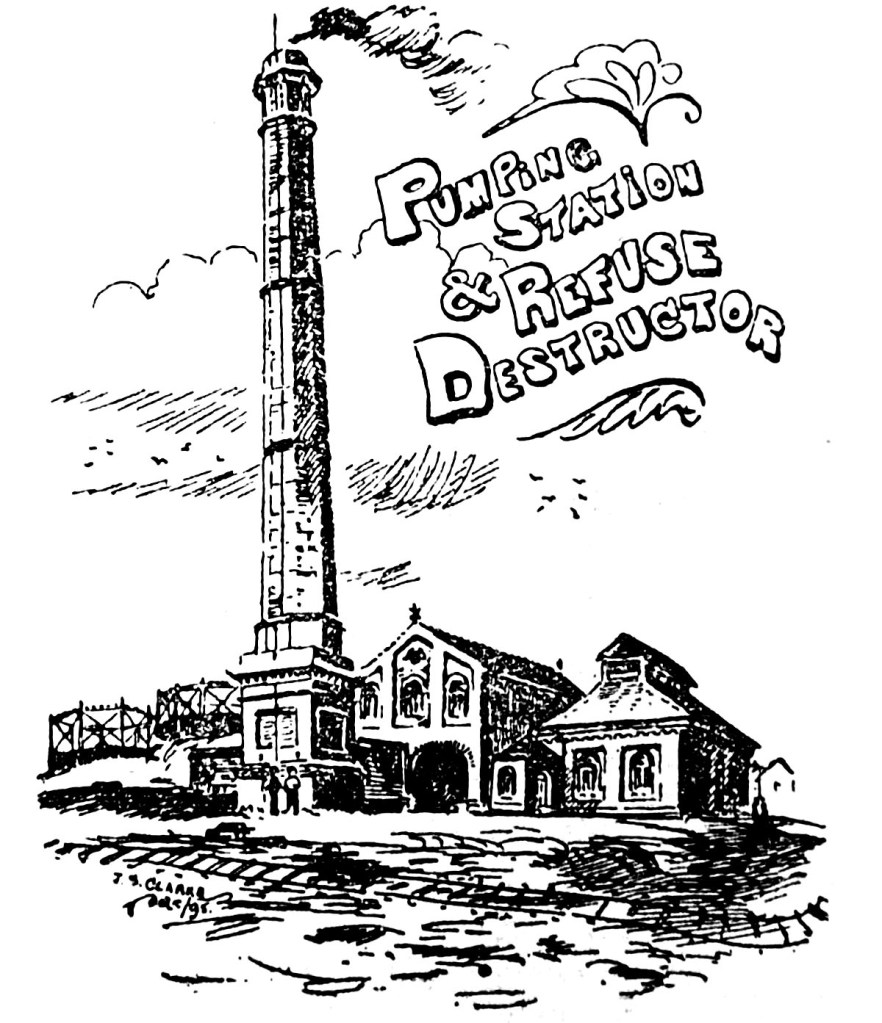
The new pumping station, Cambridge Express 26 October 1895
To mitigate the absence of Tudor’s Circus, there was good news for the people of Cambridge and Chesterton. A long-awaited scheme to deal with the sewage had finally been agreed. On 17 August 1894 the Cambridge Independent Press (page 5) reported that ‘The pumping station is now being erected on the ground adjoining the gas works and facing the river. The main building is already 10 or 12 feet above ground, while the chimney, which is to be about 200 feet high, is at present about 20 to 30 feet above ground.’ That building, with its original, unique pair of Hathorn Davey pumping engines, is the home of Cambridge Museum of Technology.
With the town’s sewage on its way to being dealt with, or at least pumped to Milton, Cambridge also managed to rid itself of another malign and repugnant stain and stink. As Caroline Biggs puts it (The Spinning House: How Cambridge University locked up women in its private prison, 2024, p 210), when the Cambridge University and Corporation Act 1894 received royal assent on 3 July, it ‘instantly [terminated] the vice chancellor’s right to arrest and imprison women who were suspected of prostitution’. The terrible injustice of the Spinning House – the University’s prison for innocent-in-the-eye-of-the-law women – was finally removed.
‘The new Act also liberated the town and its inhabitants from other ancient restrictions governing trade and entertainment . . .’ Caroline Biggs states. At last, the vice-chancellor would no longer be able to veto the circus – ‘one of the exceptional privileges of the University which many think ought to be swept away’ as the Cambridge Daily News, 8 October, 1890 had put it.
In the meantime, the Royal Show had been on Midsummer Common.
The Royal Show
From Park Parade at the western end of what we call Jesus Green to Cutter Ferry, nearly the whole common was given over to the show, which ran from 23 to 29 June. Victoria Avenue was incorporated into the site and closed as a thoroughfare; Midsummer Fair was relocated to Stourbridge Common.
This brief section tells us nothing whatsoever about circuses but the show was an interesting event in late-Victorian Cambridge that we think is worth describing. And we must ask: without Charlie Keith or William Tudor to entertain them, where did Cambridge and Chesterton folk go for fun that summer? Would they have paid 2/6d to go and look at horses that didn’t do any tricks or provide racing tips? And, did it all annoy the fellows of Jesus College as much as the circuses did?
According to the Illustrated London News (23, June 1894, page 13):
There are 617 horses at Cambridge . . . 659 cattle . . . and 588 sheep . . . but no pigs, on account of the swine fever. In addition, there are 670 entries of poultry, 162 of butter, 72 of cheese, 74 of cider, 10 of jams and preserved fruits, and 220 of hives and honey.
There were exhibitions, too, of tools and machinery, the latter no doubt including spectacular steam engines and the machines they powered. The site plan shows two substantial strips marked ‘Machinery in Motion’.
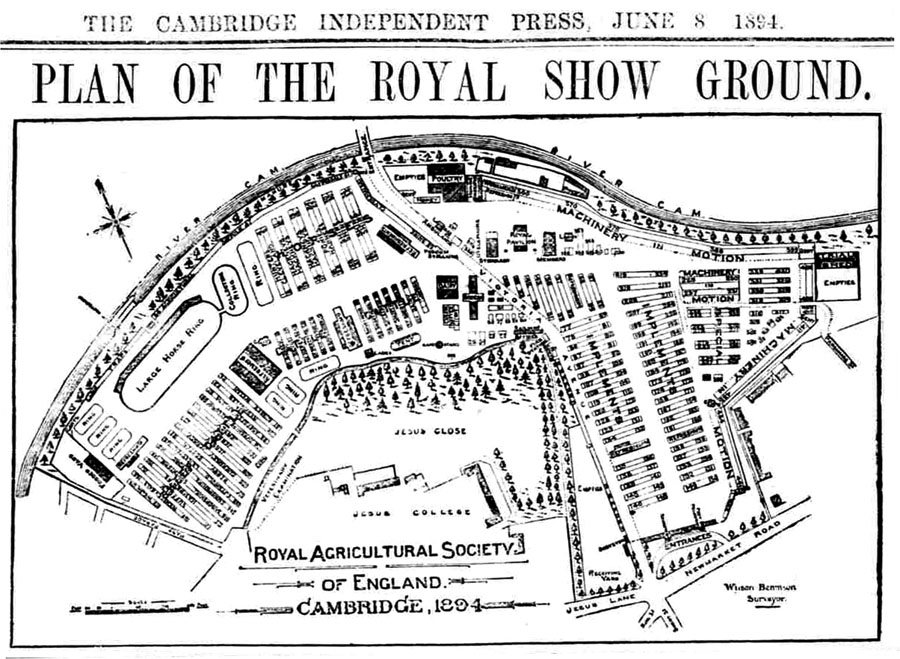
This official site plan in the Cambridge Independent Press, 8 June 1894, shows how the Royal Show filled Midsummer Common, but the Cambridge Express (below, also 8 June) somehow managed to obtain an aerial view of the site. Note the triangular slice of Midsummer Common west of Victoria Avenue and north of Jesus Lane that was enclosed by Jesus College in 1930 and that the stretch of Newmarket Road east of Jesus Lane is generally known as Maids’ Causeway.
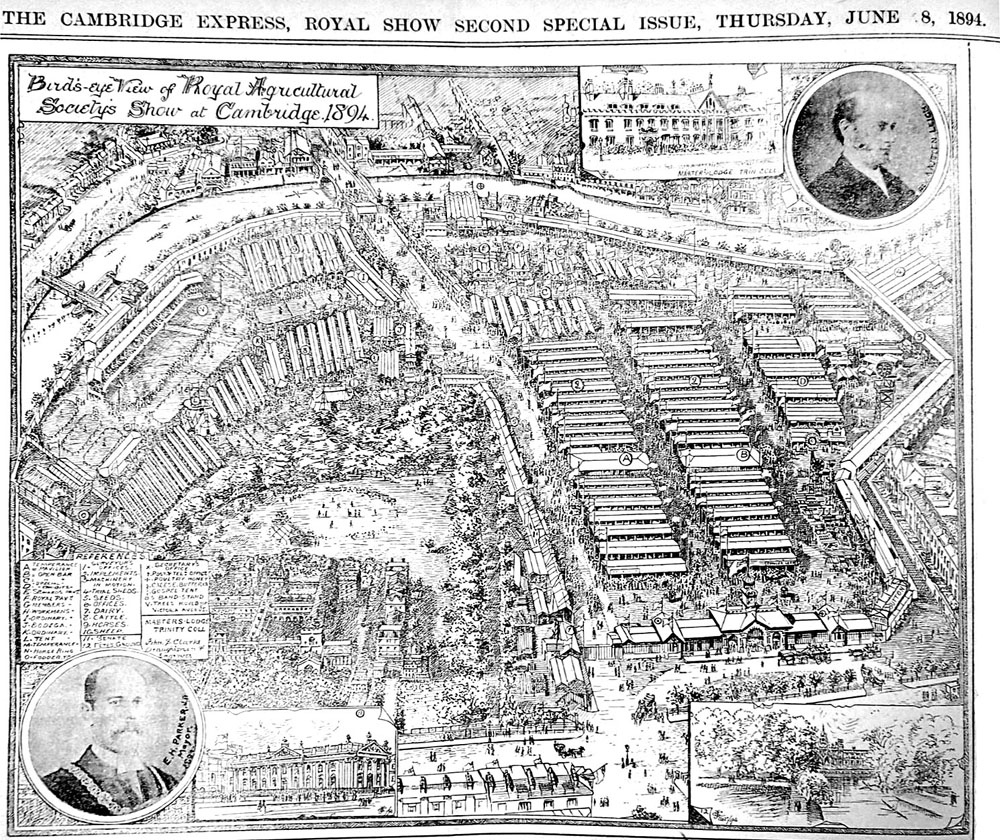
Jesus Lock, the Victoria Bridge, Ferry House, the Fort St George and Midsummer House are all landmarks we would recognise today. Jesus College dominates the lower-left quarter, while Jesus Lane and Maids’ Causeway run across the bottom. The distinctive buildings of Brunswick Walk bound Butt Green on the east, and Victoria Avenue, closed off except that the bridge provides pedestrian access from Chesterton, bisects the site. The substantial main entrance building with its carriage way faces Maids’ Causeway.
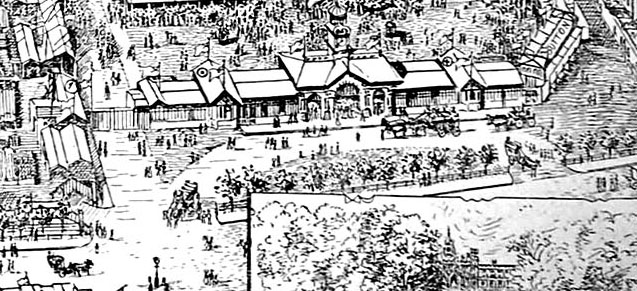
A closer look at the entrance which faced Maids’ Causeway. At the right-hand end was a Post and Telegraph Office. The Four Lamps junction lamp-post is just visible, bottom left. Victoria Avenue has gates across its southern end.
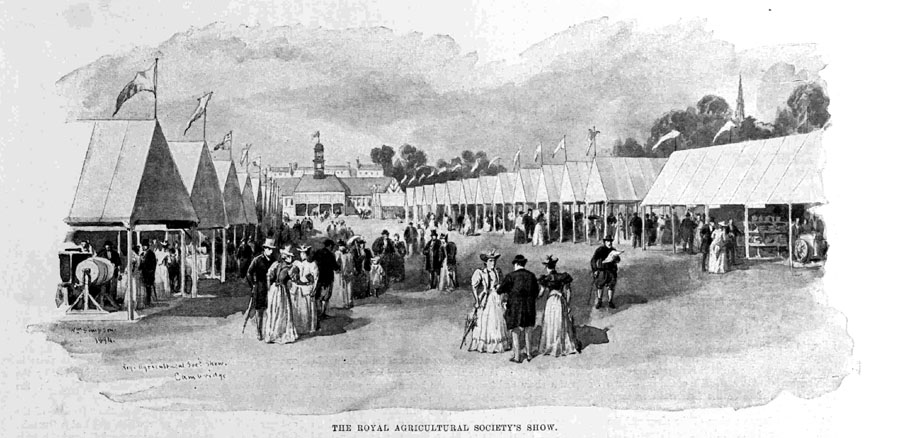
The view towards the back of the entrance building with houses in Doll’s Close in Maids’ Causeway beyond it and pavilions housing implements on either side. (Illustrated London News, 23 June 1894, page 13)
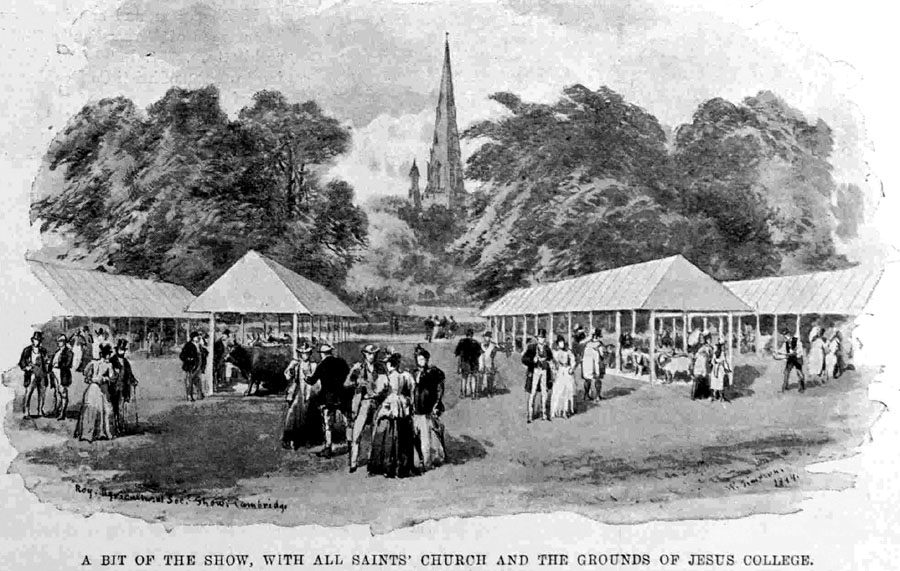
Bovine to the left of them, ovine to the right of them, the Illustrated London News artist drew this from a point close to today’s Jesus Green tennis courts (23 June 1894, page 13)
 William Tudor's Circus